From an op shop/charity shop/garage sale, find the right sort of dictionary, with pages of reasonably thick paper, and a size of book/column width that lends itself to bookmarks:
...like this one, and you have hundreds of bookmarks for a few dollars. Just some slicing with the guillotine. (Or do you have a suitable dictionary that is overdue for being culled?)
Libraries Define Your World:
there's a theme you could tie in with it. I think definitions have a lot of scope for use for display purposes in libraries. A department store book section featured this, in big print, high on the wall:
And they used definitions on their lampshades:
There's an idea worth adapting/borrowing: how could you use definition decor in your library? Think of the rich (and amusing) words you could define. Not just Book, or Reading. Student. Work. Study. Learn. Adventure. Discover.... lots of potential there, isn't there?
Cheers
Ruth
*GIFSL = good ideas for school libraries, an ongoing series on this blog.
Showing posts with label greenery. Show all posts
Wednesday, May 25, 2011
Tuesday, May 24, 2011
GIFSL* 61: Cheap Bookmarks Week (Tuesday)
Before you cry, "VANDAL!" let me point out that this hardback copy of Harry Potter fell to bits after being loved to death by our library borrowers. Pages falling out all over, irreparable. But not useless. Oh dear me no. Because every left hand page of the book has the header, "Harry Potter". The pages are a reasonable weight of paper. And the knowledge of Harry Potter among children is extensive. And J.K. Rowling created with these books a world and vocabulary that is highly recognisable. Character names, spell words, place names and more.
So if you take a page with Harry Potter as its header, and slice down either side to a bookmarky sort of size, you'll get, pretty much every time, some bit of recognisable vocab on the page (as well as the Harry Potter cue at the top). Lupin. Hogwarts. butterbeer. Expelliarmus. And you will also get a bookmark that kids like and which hasn't cost you a bean.
And there are lots and lots of pages in Harry Potter books, so you have lots and lots of bookmarks which you can share generously and without a qualm. It's recycling and it's useful and fun.
Tune in tomorrow for another cheap bookmark idea!
Cheers
Ruth
*GIFSL = good ideas for school libraries, an ongoing series on this blog.
So if you take a page with Harry Potter as its header, and slice down either side to a bookmarky sort of size, you'll get, pretty much every time, some bit of recognisable vocab on the page (as well as the Harry Potter cue at the top). Lupin. Hogwarts. butterbeer. Expelliarmus. And you will also get a bookmark that kids like and which hasn't cost you a bean.
And there are lots and lots of pages in Harry Potter books, so you have lots and lots of bookmarks which you can share generously and without a qualm. It's recycling and it's useful and fun.
Tune in tomorrow for another cheap bookmark idea!
Cheers
Ruth
*GIFSL = good ideas for school libraries, an ongoing series on this blog.
Monday, March 14, 2011
Extreme weather events of 2010: slideshow

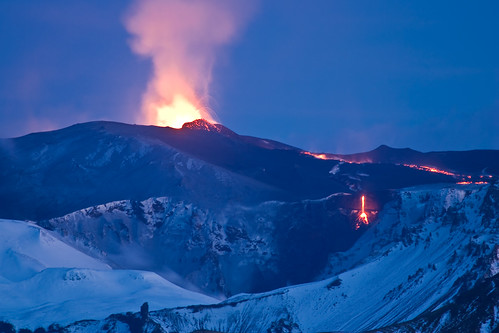
It's always worth mining a site that has tossed up one useful thing as it's likely to have others. Along with the infographics I told you about a while ago, Good.is has slideshows, such as this one with excellent images and content on extreme weather events of 2010 - snow! drought! volcanoes! - and more.
Another one to share with your Science, Geography and Earth and Environment teachers. You could also suggest that students could do their own versions, sourcing their own images and content in this 12-slide format.
Cheers
Ruth
Image source is Flickr: Volcanic Eruption Eyjafjallajökull. Click on the image to go to the photographer's photostream. Creative Commons licensed.
Tuesday, February 15, 2011
Powering a lightbulb: Infographics
Are you looking for some dandy graphics to explain ideas to your students (or are your teaching colleagues looking to you to do this??)?
Good.is has some useful transparencies, including this one. Site link. Image only.
Share this with your Science, Geography, Maths etc teaching colleagues, then investigate what else you can find on the site to share among their infographics (some fairly US-centric, but not all).
Cheers
Ruth
Good.is has some useful transparencies, including this one. Site link. Image only.
Share this with your Science, Geography, Maths etc teaching colleagues, then investigate what else you can find on the site to share among their infographics (some fairly US-centric, but not all).
Cheers
Ruth
Wednesday, September 23, 2009
The happy life of teacher librarians: a dusty day
Like many of us today, home and the journey to school and school itself were brown experiences, dust in the air, the sky brown too, the wind whirling dust and visibility reduced; the colour of the day oddly orange as the sun struggled through. Dust from the inland brought by gale force winds has changed the look of the day and the world around us in an unusual way. Even in my office you can (barely) smell/taste it.
Before school conversation:
Miss?
Yup?
The dust is scary...
Nope, it's dust. Brown stuff. Flying dirt.
I guess...We'll be allowed to go home if it gets too dusty, won't we?
And that would be why?
Because it's dusty.
Right. Because it's dusty, we'll send you out INTO the dust to walk home instead of keeping you at school where we have buildings that you can be in, protected from the dust.
Oh. It wouldn't be sensible to send us home then, would it?
No.
I guess not. There isn't a rule about sending us home if it gets too dusty, like the one about when it's too hot?
Not to my knowledge.
Oh well.
You can always hose your lawn after school and see if you get a rates notice from Dubbo, as a man said on the radio this morning...
(they take a moment to digest this, then chuckle).
Cheers
Ruth
PS If you'd like to see a gallery of pictures like the one below, the Sydney Morning Herald has one, including this unusual view of the Sydney Opera House - click here.
Before school conversation:
Miss?
Yup?
The dust is scary...
Nope, it's dust. Brown stuff. Flying dirt.
I guess...We'll be allowed to go home if it gets too dusty, won't we?
And that would be why?
Because it's dusty.
Right. Because it's dusty, we'll send you out INTO the dust to walk home instead of keeping you at school where we have buildings that you can be in, protected from the dust.
Oh. It wouldn't be sensible to send us home then, would it?
No.
I guess not. There isn't a rule about sending us home if it gets too dusty, like the one about when it's too hot?
Not to my knowledge.
Oh well.
You can always hose your lawn after school and see if you get a rates notice from Dubbo, as a man said on the radio this morning...
(they take a moment to digest this, then chuckle).
Cheers
Ruth
PS If you'd like to see a gallery of pictures like the one below, the Sydney Morning Herald has one, including this unusual view of the Sydney Opera House - click here.
Thursday, September 3, 2009
Climate change games
Looking for some climate change games for a colleague doing climate change/greenhouse effect etc with Year 8, I came across a few likely looking prospects. I haven't entirely played all these, but they looked promising.
http://www.electrocity.co.nz/
.
Electrocity
http://www.electrocity.co.nz/
.
From New Zealand, this game of 150 turns (but you can take them FAST to grow your city) offers development options and choices - stay green? get big? and the players need to keep their choices supplied with electricity. Games can be saved, and there are viewable examples of other people's cities to see various possibilities. Lots of scope in this one - let kids loose, or maybe set some to grow a metropolis, others to set up an ecologically sustainable place (that is also still economically viable). Students should pay attention to the hints tab... I used this one with a class group, and it's now VERY popular at lunchtimes too - engaging/challenging enough for students to want to play it more to increase their scores and skill.
.
Let's learn why the earth's climate is changing
.
Although this one looks more aimed at primary school level audiences than secondary, it covers a bunch of issues visually and engagingly, and could be useful with younger/lower secondary classes.
.
Stablization Wedges
.
This one is a board game rather than online, with a 16-page pdf giving you the playing pieces etc. Having outlined a variety of strategies to level off global warming (eg. wind farms), players then need to select their choice of wedges.
There is a slideshow about the options here:
.
Climate Challenge
.
From the BBC, this requires players over several turns to balance out politics and choices to see the impact of these on climate (and voters). I'd recommend the tutorial on this one, so students understand what is required and how the game works.
.
Among the sources from which I found these are a links page here and one here and the Wikipedia article on global warming games. All of these offer a bunch more links and ideas on the greenhouse effect, climate change, global warming and so forth and so on.
.
Cheers
.
Ruth
.
PS If you have any other recommendations along similar lines, do please add them in a comment, with the URL, so others can benefit.
.
Wednesday, August 26, 2009
GIFSL*: 40. Signage: Welcome
Of course you welcome people to your library - don't you?
.
We recently added a WELCOME sign.
.
.
I could, of course, try telling you that we commissioned this banner at tremendous expense, the aqua colour chosen to match the foyer, and so forth and so on.
.
Trouble is, if you've been reading this blog for any time at all, you'd be calling me a liar and, fixing me with THAT sort of beady eye, asking me for the truth.
.
Remember the floor cushions we made from banners? The banners came from Reverse Garbage, which had them from The Rocks Authority (for those to whom this is mysterious, The Rocks is one of the most historic areas of white settlement Sydney, and houses museums and encourages tourism - it's on the southern end of the Harbour Bridge. So it's a place where banners happen, and clearly an Authority run by wise good people who send their banners to Reverse Garbage when they've finished with them, so their banners will find new homes).
.
Where was I?
.
Ah yes, at Reverse Garbage, hauling through the banner box in search of treasure. Not only did I find the purple and green banners which became floor cushions, but also a couple of these WELCOME banners (and nary a mention of the Rocks on them anywhere).
.
Oh, by the way, I took all the ones I found while I was there. Reverse Garbage is the kind of place where you don't know what you're going to find until you find it, and then you snaffle it because it won't be there next time. We hung this from one of the rafters using self-adhesive hook/loop tape (Velcro). And it will have a longer life recycled to greet those coming to its new home. (Even if, because was hung vertically at the Rocks, the word WELCOME on the back is upside down...!).
.
There is, however, nothing at all to stop you finding all sorts of ways to WELCOME people into your school library. Is there? Go outside your library, walk in and see when you notice the first signs of welcome (whether they're signs or something else). Can you improve on what's there now?
.
Cheers
.
Ruth.
.
Monday, June 29, 2009
GIFSL*: 37. Floor cushions and comfort
When we created the reading retreat in the library earlier this year, we didn't know the impact it would have. On reflection, it's one of the most popular changes we've made, and this is proved over and over by the individual students who come in the morning, recess, lunch, study periods, all through the day, and plonk themselves in a soft chair or on the sofa, book in hand. You see them relax, and settle.
For all my years at schools as a student and a teacher, I hadn't realised/particularly thought about how few places there are in a school to be comfortable. Out in the playground, places to sit are usually, of necessity, hard surfaces - cement, brick, timber. Inside in classrooms, chairs are generally plastic - again of necessity. For students, carpeted floors may be the only place to sit on something softer.
We did have some soft seating upstairs in fiction, before, but the reading retreat added in seventeen more seats (or even more, when students, rather in the manner of puppies, cram themselves three on two seats, or four on the sofa).
The configuration also has corners to settle into - I see these soft chairs in other school libraries and schools but they're often around a low table, with space around them. What you can do does, of course, depend on your library. We happened to be working with a narrow mezzanine. But as I watch how students use this space, the corner-ness of it is, I see, more important than you might think. Drifting through my mind are thoughts of Ratty, Mole, Badger, and In a hole in the ground lived a hobbit. Even if I had a wide open space, I think, now, I'd still try to achieve cosy and corners, having seen how students respond to this.
We still didn't have enough for every student in a junior class of thirty to have a comfy seat...
Then, last school holidays, another TL pal and I went to visit Reverse Garbage. This is a non-profit co-operative based in Marrickville, Sydney, that collects and resells industrial discards: Reverse Garbage is a not-for-profit co-operative that sells industrial discards, off-cuts and over-runs to the public for creative and practical uses, reducing the amount of waste going to landfill.. You never know what you're going to find when you go there. Could be anything. You need to go with an open mind and imagination.
If you're teacher librarians without a lot of cash but with enthusiasm and the aforesaid open minds and imaginations.... well, you can go with an idea of what you might like to find, or a need/purpose you have in mind. What might you find?
I found these.
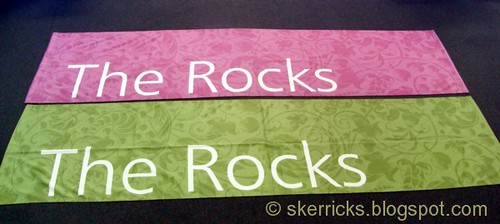
Once upon a time they were street banners from the Rocks historic area of Sydney. I've found street banners at Reverse Garbage before (as seen in the background here), but these were different. The fabric here is a synthetic with a sueded surface, feeling lovely on the hand. But, you say, they're advertising the Rocks, and what are you going to do with them in a school library?
We were talking about comfort, weren't we? This is what we did:
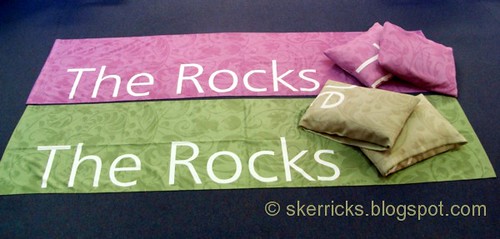
Floor cushions. The width of the banners happens to neatly fit the width of a standard pillow (two for $10 at K-Mart). We made them 'envelope' style as you see, and were able to make ten floor cushions, using up all the banners.
Sure, some of the cushions say The or ocks, but who cares? Our students sure don't. The ones who aren't on the soft chairs or sofa, reading, during a wide reading period, are sprawled on the floor or propped against a wall, on a floor cushion. It's only a little bit of comfort, but it's an important little bit. It says, your comfort is important. Here's something we can offer, something we have thought of for you. Enjoy your reading. Welcome. I've even had kids give up a soft chair because they'd rather have one of these. I hadn't expected that. Floor cushion diplomacy.
What you need: there are lots of places to find fabric (new or, like us, recycled) at discount prices. Look for one that does feel good - this has been commented on by a lot of kids in relation to our cushions. Partly because of the dimensions of the banners, and partly because they were price-competitive with cushion inserts, we used the pillows. Students have liked this size, too - for sitting, lounging, draping themselves over lying on their bellies (and...and...they'll always think of something you haven't!).
How much were the banners? I filled a nearly sack-sized bag for $30 - and got more banners in than the ones that became the floor cushions. Plus some other good things (you'll see 'em blogged soon). Total spend was about $60, and it's an environmental tick too. At Reverse Garbage, some items are sold on a per-item price basis, others on fill-a-bag - from around $6 for filling a supermarket green bag size on up. And yes, I'll tell you that given that these banners have been up lamp-posts, out in the air and weather, some are a little more faded than others...but it's part of their life, and authentic. And I don't care, and neither do the kids, as they sit down to read. And in the end, that's what matters, that they're reading and happy and comfortable in the library.
Cheers, Ruth
*GIFSL = Good Ideas For School Libraries
For all my years at schools as a student and a teacher, I hadn't realised/particularly thought about how few places there are in a school to be comfortable. Out in the playground, places to sit are usually, of necessity, hard surfaces - cement, brick, timber. Inside in classrooms, chairs are generally plastic - again of necessity. For students, carpeted floors may be the only place to sit on something softer.
We did have some soft seating upstairs in fiction, before, but the reading retreat added in seventeen more seats (or even more, when students, rather in the manner of puppies, cram themselves three on two seats, or four on the sofa).
The configuration also has corners to settle into - I see these soft chairs in other school libraries and schools but they're often around a low table, with space around them. What you can do does, of course, depend on your library. We happened to be working with a narrow mezzanine. But as I watch how students use this space, the corner-ness of it is, I see, more important than you might think. Drifting through my mind are thoughts of Ratty, Mole, Badger, and In a hole in the ground lived a hobbit. Even if I had a wide open space, I think, now, I'd still try to achieve cosy and corners, having seen how students respond to this.
We still didn't have enough for every student in a junior class of thirty to have a comfy seat...
Then, last school holidays, another TL pal and I went to visit Reverse Garbage. This is a non-profit co-operative based in Marrickville, Sydney, that collects and resells industrial discards: Reverse Garbage is a not-for-profit co-operative that sells industrial discards, off-cuts and over-runs to the public for creative and practical uses, reducing the amount of waste going to landfill.. You never know what you're going to find when you go there. Could be anything. You need to go with an open mind and imagination.
If you're teacher librarians without a lot of cash but with enthusiasm and the aforesaid open minds and imaginations.... well, you can go with an idea of what you might like to find, or a need/purpose you have in mind. What might you find?
I found these.

Once upon a time they were street banners from the Rocks historic area of Sydney. I've found street banners at Reverse Garbage before (as seen in the background here), but these were different. The fabric here is a synthetic with a sueded surface, feeling lovely on the hand. But, you say, they're advertising the Rocks, and what are you going to do with them in a school library?
We were talking about comfort, weren't we? This is what we did:

Floor cushions. The width of the banners happens to neatly fit the width of a standard pillow (two for $10 at K-Mart). We made them 'envelope' style as you see, and were able to make ten floor cushions, using up all the banners.
Sure, some of the cushions say The or ocks, but who cares? Our students sure don't. The ones who aren't on the soft chairs or sofa, reading, during a wide reading period, are sprawled on the floor or propped against a wall, on a floor cushion. It's only a little bit of comfort, but it's an important little bit. It says, your comfort is important. Here's something we can offer, something we have thought of for you. Enjoy your reading. Welcome. I've even had kids give up a soft chair because they'd rather have one of these. I hadn't expected that. Floor cushion diplomacy.
What you need: there are lots of places to find fabric (new or, like us, recycled) at discount prices. Look for one that does feel good - this has been commented on by a lot of kids in relation to our cushions. Partly because of the dimensions of the banners, and partly because they were price-competitive with cushion inserts, we used the pillows. Students have liked this size, too - for sitting, lounging, draping themselves over lying on their bellies (and...and...they'll always think of something you haven't!).
How much were the banners? I filled a nearly sack-sized bag for $30 - and got more banners in than the ones that became the floor cushions. Plus some other good things (you'll see 'em blogged soon). Total spend was about $60, and it's an environmental tick too. At Reverse Garbage, some items are sold on a per-item price basis, others on fill-a-bag - from around $6 for filling a supermarket green bag size on up. And yes, I'll tell you that given that these banners have been up lamp-posts, out in the air and weather, some are a little more faded than others...but it's part of their life, and authentic. And I don't care, and neither do the kids, as they sit down to read. And in the end, that's what matters, that they're reading and happy and comfortable in the library.
Cheers, Ruth
*GIFSL = Good Ideas For School Libraries
Friday, May 22, 2009
GIFSL*: 27. Newspaper Tubs
Like most school libraries, we end up with past copies of newspapers. Staff or students may not collect the papers they've paid for, plus there are the papers the library receives, and which we don't stockpile forever.
.
These spare papers have a variety of uses around the school - the Visual Arts people use them for table protection, papier maché etc, other subjects use them for content. We've evolved a system to make it simple for the papers to find new homes, and simple for others to use.
.
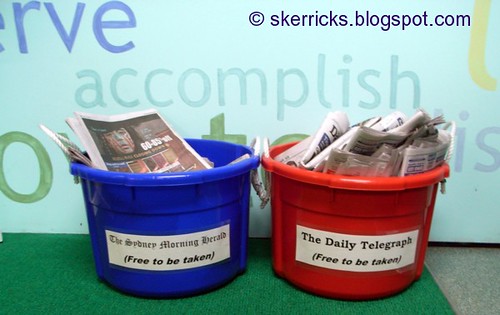
Herewith, the newspaper tubs.
.
.
They are located in the library foyer, for several good reasons. Easy to find. Clear to see. Don't need to be pointed out by library staff (although we still do that, regularly). It's not the most elegant feature of the foyer, but it's functional, and works for our clientele and us.
.
We separate out the two main papers, the broadsheet Herald and the tabloid Telegraph, because people sometimes want just one or the other, either because of size or content. We got two different colour tubs (they came from Bunnings Hardware, at around $13 each, from memory) so it was easy to say, if you want the Tele, it's in the red tub. It's worth buying reasonably durable tubs, as less durable ones tend to split/break. The labels include the mastheads as another visual cue as to which paper is in which.
.
Sometimes the tubs get full, and we take papers to the paper recycling dumpster; but usually, we'll check with Art, and they'll want papers, getting another use out of them before they leave the school. The tubs have been working well for us - it's so much easier, when someone comes in search of newspapers, to say, "See the red and blue tubs by the door? You can take whatever you want from them."
.
What you need: durable tubs, and a place to put them. Easy!
.
Cheers, Ruth
.
Tuesday, February 17, 2009
Google Ocean
Some time ago, a scientist said to one of the Google Earth team, "You've done a great job with the dirt - but what about the water?"
The latest upgrade to Google Earth is Google Ocean. One feature is an historical one - eg. watch the effect on the coast of Hurricane Ike.
Another feature, Historical Imagery, provides the ability to scroll back through decades of satellite images and watch the spread of suburbia or erosion of coasts.
Click a function called Touring and you can create narrated, illustrated tours, on land or above and below the sea surface, describing and showing things like a hike or scuba excursion, or even a research cruise on a deep-diving submarine.
Read about the changes and possibilities in a New York Times article here.
Google Earth's page for educators is here. Google Ocean is in Google Earth 5.0, so check your current version if the ocean options aren't there.
.
The latest upgrade to Google Earth is Google Ocean. One feature is an historical one - eg. watch the effect on the coast of Hurricane Ike.
Another feature, Historical Imagery, provides the ability to scroll back through decades of satellite images and watch the spread of suburbia or erosion of coasts.
Click a function called Touring and you can create narrated, illustrated tours, on land or above and below the sea surface, describing and showing things like a hike or scuba excursion, or even a research cruise on a deep-diving submarine.
Read about the changes and possibilities in a New York Times article here.
Google Earth's page for educators is here. Google Ocean is in Google Earth 5.0, so check your current version if the ocean options aren't there.
.
Friday, August 22, 2008
Catchment Detox
Catchment Detox from the ABC (Australian Broadcasting Corp.):
It’s an online game where the player manages a virtual river catchment. It’s not a pristine catchment, there is agriculture, industry and tourism already in place. There are also environmental problems that need to be fixed. The game goes for 50 turns and you make as many changes to the landscape as you like (you can also do none!) before taking your next turn. The aim is to create an environmentally happy catchment with a sustainable and thriving economy.
Home page is here.
Teacher info page is here (thanks, ABC!)
There's a competition running right now that finishes in two weeks (early Sept 2008) but I haven't yet found any indication of whether they'll leave the game after that (hope they do).
It’s an online game where the player manages a virtual river catchment. It’s not a pristine catchment, there is agriculture, industry and tourism already in place. There are also environmental problems that need to be fixed. The game goes for 50 turns and you make as many changes to the landscape as you like (you can also do none!) before taking your next turn. The aim is to create an environmentally happy catchment with a sustainable and thriving economy.
Home page is here.
Teacher info page is here (thanks, ABC!)
There's a competition running right now that finishes in two weeks (early Sept 2008) but I haven't yet found any indication of whether they'll leave the game after that (hope they do).
Monday, August 18, 2008
Updates: Black Google and Twilight film
Thanks to a couple of commenters - here's some additional info.
There are apparently a number of versions of black google around, and Cleanblack is one that allows you to play a little with colours.
Twilight film release date: with the Harry Potter film pushed by the distributors from a November 2008 release to a July 2009 release (to be a 'tentpole summer film' or some such - but the fans are squealing as you may well imagine), the distributors of Twilight have jumped into this convenient 'hole' and have moved the US release date for the Twilight film from December to 21 November 2008. At the moment the Australian release date appears to be the same as it has been thus far, 9 January 2009: but perhaps the HP change will have a knock-on effect here too. The Internet Movie Database (imdb) page is usually a reliable source of release date info (although it hasn't yet caught up with the Twilight change, it will). Twilight's imdb page is here, with worldwide release dates.
There are apparently a number of versions of black google around, and Cleanblack is one that allows you to play a little with colours.
Twilight film release date: with the Harry Potter film pushed by the distributors from a November 2008 release to a July 2009 release (to be a 'tentpole summer film' or some such - but the fans are squealing as you may well imagine), the distributors of Twilight have jumped into this convenient 'hole' and have moved the US release date for the Twilight film from December to 21 November 2008. At the moment the Australian release date appears to be the same as it has been thus far, 9 January 2009: but perhaps the HP change will have a knock-on effect here too. The Internet Movie Database (imdb) page is usually a reliable source of release date info (although it hasn't yet caught up with the Twilight change, it will). Twilight's imdb page is here, with worldwide release dates.
Monday, July 28, 2008
Blackle
A recent SMH article on greener computing mentioned Blackle, an initiative from an Australian company, Heap Media. Based on the idea that black/grey screen colouring requires less power than white or brighter colours, it gives you the Google search engine in basic, cut-down monochrome simplicity.
Wonder how much power would be saved if school computers routinely used this instead of ordinary Google (except for students/staff with vision problems, which is a fraction of the total)?
(The SMH article was called, Laying waste to yesterday's widgets).
http://www.blackle.com/
Added later: commenters have added their input to this entry re vision problems and the claims about Blackle, so do read what they have said.
Subscribe to:
Posts (Atom)